BEAUTIFUL FLOWERS

This site is dedicated to information about the different types of flowers, the meaning of flowers, potted plants or freshly cut bouquets.


The clematis is a large genus of flowing plants that contains about 300 species and is a member of the ranunculaceae family. Clematis plants are woody, climbing shrubs and herbaceous perennials with delicate stems, and divided leafstalks and leaflets which allow the plant to become anchored to nearly any structure. These plants are best known for their elegant blossoms. These flowers can grow from a tiny 1 inch to 10 inches in circumference. The lightly-scented heads may form in singles, doubles or both, and can – depending on their environment – drastically change in color throughout their lifespan.


Some of the earliest records of clematis plants can date back as far as 1569, when new species such as C. viticella were introduced into Britain. Despite this fact, the public did not take a genuine interest in these plants until sometime during the 1850s. During this period of time, botanists began hybridizing clematis plants – creating stronger, more attractive breeds such as the Jackman clematis and the gipsy queen clematis. Unfortunately, after years of breeding, hybridizers ran out of ideas for new combinations, and the interest in these plants began to fade. Thankfully, though, this lull in plant breeding seems to have weeded out the weaker species, and today – with the interest in clematis back in full swing – we find that many varieties are hardy and relatively free of disease. With the resurgence of interest in clematis plants, it is not surprising that flower enthusiasts around the world are coming together to show their passion. One great example of this is the American Clematis Society, which has been active for over a decade, and is committed to spreading the vast knowledge of all of its members. The British Clematis Society holds a similar ideal, but rather than simply spreading literature on the plant, this group holds large public events to help broaden awareness.


Clematis was once considered an emblem of deception; today, however, these plants are considered a symbol for cleverness and beautiful brilliance. As a gift, these climbing shrubs are frequently given as a compliment to the recipient – a sweet way to tell them that they are not only stunning, but also absolutely ingenious. These plants are also an emblem for the 8th year of marriage, and make for lovely anniversary gifts. Because they contain essential oils that may be irritating to the skin, they are almost never presented in the form of a bouquet; however, potted varieties are just as stunning, and will last a good deal longer.


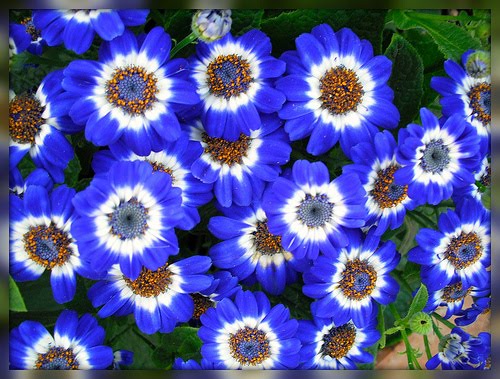
The cineraria flower – sometimes known at the florist’s cineraria – is a hybrid species in the pericallis genus and belongs to the vast compositae family. These plants, which are native to England, grow their best in thoroughly moistened soil and a good deal of shade. These blossoms are made up of stems covered in fine hair; large velvety leaves that can reach sizes of 6 inches in length and 4 inches in width; and 2 to 3 inch heads that have a center made up of disk flowers, and a single row of ray flowers surrounding it. What makes cineraria flowers a favorite amongst gardeners and florists is the variety of vibrant colors. These plants may be seen in shades of magenta and violet, blue, white and red; they may be variegated, uniformly bicolored, or have contrasting centers.


During the late 1700s, Francis Masson – the Scottish gardener and botanist – was sent out on a mission to collect new plants for the Royal Botanic Gardens. From this particular trip he sent home several species of senecio – a genus which, at the time, housed the cineraria – and from these species, the cineraria flower that we know today was developed. The delicate but vibrant beauty of the cineraria flower has made it a well-loved subject for a number of arts and celebrations. Photography is undoubtedly the favored medium for this particular blossom. Photographers such as Luis Correia and Margaret Barry capture the cineraria in stunning reality, while Cee Neuner and Julia Wright feature them in a more abstract manner. Although paintings of these flowers are rare, a few artists have created lovely pieces such as, “The Cineraria Flower,” by Gilbert Lam, and the 1923 painting, “Cineraria,” by Charles Demuth. As for celebration, these blossoms were officially named the theme flower for the 2010 Hong Kong Flower Show in Victoria Park, where organizations from around the world were able to show off their own exotic plant life.


Cinerarias represent delight, and when given as a gift, they are commonly meant to represent the pleasure that the giver feels simply from being around the recipient. A large bouquet filled with this particular blossom can make for a stunning, cheerful and long lasting present – living between 10 to 20 days if kept well moistened. However, if the recipient has something of a green thumb, they may prefer the potted variety.


The chrysanthemum flower is a genus of roughly 30 species, and is sometimes referred to as a mum or chrysanth. These flowers, which are members of the asteraceae family, are indigenous to northeastern portions of Europe, as well as regions of Asia. These herbaceous perennial flowers come in a variety of shapes and colors. The head, which is actually a cluster of many smaller flowers, may be seen in pompons, decorative, button or daisy shapes – depending upon their species. They can be seen in hues of yellow, red, white and pink. They are also classified into nine separate categories: reflexed, intermediate, pompon, late flowering, incurved, singles, charms, quills and cascades.


Today, the chrysanthemum flower has almost certainly become one of the most sought after garden blossoms around. However, these blooms have a long – and well traveled – history. Their cultivation was originally noted around 15th Century B.C. in China and, in fact, can be seen in early art. In Japan, this flower was introduced some time in the 18th Century A.D., when a 16-floret species called “Ichimonjiginu” was then adopted as a crest by the Emperor. In the Western world, chrysanthemum finally came to light during the 17th Century, when Swedish botanist Carl Linnaeus named the plant from the Greek words “chrysous” and “anthemon” meaning “golden flower.” Since then, these ornamental blossoms have become quite the hit, and can be seen anywhere from prom night corsages in the United States to large exhibitions in Japan. The chrysanthemum flower is more than just a pretty plant, though. These flowers are considered not only highly edible – with a faintly bitter, tangy flavor – but quite the curative as well. The leaves of these plants are often boiled or steamed so that they may be eaten in stir-fries or salads; the petals may be used to flavor snake meat soups or rice wines. However, they are most frequently dried and turned into sweetly flavored teas which are said to work wonders on a number of ailments. The yellow chrysanthemum flower is said to help break fevers, while the white variety can be used to sooth tired eyes. They are also thought to have strong antibacterial and antifungal properties.


As a gift, the chrysanthemum flower is often given on Mother’s Day, to those who are born in November, or those who are celebrating a 13th wedding anniversary – as this blossoms are representative of all three occasions. They are also given for many romantic events, as white chrysanthemums represent loyal love, and red varieties are simple tokens that say, “I love you!” In Japan, these flowers are also emblems of a long life, and may be given on any occasion to wish the recipient a good, healthy existence.


The herbaceous perennial plant physalis alkekengi – better known as Chinese lantern flowers – is related to physalis peruviana, or the cape gooseberry. Although similar in structure, Chinese lanterns are much larger, and their outer covering is bright orange or red in appearance. These perennial flowers are indigenous to southeastern Europe and Japan, and grow their best in full sunlight and rich soil. Throughout their period of growth, the Chinese lantern flower will begin as a delicate, five-lobed corolla which will eventually become a faintly green husk that houses a small berry. Over time, the flower will turn an orange or red hue, and will become papery in its texture.


Chinese lantern flowers are frequently grown for their novel appearance; however, these flowers are also grown for a vast array of more useful tasks. For instance, many people like to use the flowers for arts and crafts, as these unique blossoms last for long periods of time when dried. They are often woven into wreaths or dried bouquets; they may be pressed into scrap books, jewelry or bookmarks; the intricate dried veins of the husk may also be gently dipped into glue or shellac to harden them, then they may be painted. The fruit of Chinese lanterns is – in small quantities – quite edible. The flavor of the fruit is considered refreshing and mild, and can be turned into sweet, exotic jellies, or simply eaten whole – some even like to eat them dipped in chocolate. Although the leaves and unripened berries of this plant are considered poisonous, many people still believe that in small doses they may have potent medicinal properties. These flowers are sometimes used to treat such things as facial paralysis, respiratory ailments, bed-wetting, fevers and even delayed labor.


Although Chinese lantern flowers may not have an especially large amount of symbolism attached to them, what they do have has made them into an endearing and joyful emblem of warmth. Given that these flowers enfold and defend the small, delicate fruit buried within their husks, they may be the perfect symbol for protection. Their fiery orange red hue denotes a passion for life, amiability, endurance and vitality. As a gift, these flowers are more commonly given dried or in silk forms. They are sometimes used in wedding bouquets or to decorate ceremonies as an alternative to the more common blossoms.


Native to Japan, Korea and China, the cherry blossom flower has become a celebrated symbol of both life and death. This is due to the fact that they burst forth in early spring, then fall to the ground within a week. The cherry blossom tree is from the genus prunus, which holds a moderate 400 species. Although the most popular cherry blossoms – the Somei Yoshino – come in a milky white shade that is tinged with a vibrant pink, many cherry blossoms – such as the yaezakura and shidarezakura – can be seen in delicate shades of an almost violet-hued pink.


The cherry blossom flower, unofficially speaking, is considered the national blossom for Japan. This is not surprising, as these blossoms have long been considered some of the most exotic, delicate and entrancing flowers in the world. Festivals and viewings have become cultural staples not only in Japan, but in Canada, the United States and Germany. They have also become a prominent figure in a number of artistic mediums. Many people use this figure in tattoos; sewn into kimonos and silk screened onto t-shirts; painted onto canvas or walls; dried and used as decorative pieces, or simply used as inspiration for music and poetry. The cherry blossom flower has also become a very popular theme for weddings. This is due largely to its romantic and unique beauty; however, it is also used as means to represent hanging on to one another despite the ephemeral nature of existence.


The cherry blossom flower makes for an unusual, elegant and deeply meaningful gift. Despite the overall idea that cherry blossoms are an emblem for the transience of life, they tend to have a different meaning depending upon location. For example, in China they are thought to be the ultimate symbol for feminine beauty, sensuality and strength. The Japanese blossom, however, is meant to represent the Buddhist teachings of the nobility of strength in acceptance of all phases of life. Although many people present these flowers in their more artistic formats, you can very easily give them as single flowers, as a dried branch, or in their more edible, pickled form.


The chenille plant is a flowering shrub which belongs to the acalypha genus, and is a member of the euphorbiaceae family and acalyphoideae subfamily. This tropical plant is native to the Pacific islands, and grows its best with minimal moisture, in light soil and full sunlight. It is not uncommon for these bushy shrubs to reach heights of 12 feet; however, there are also dwarf varieties available that will grow – at their largest – to heights of 18 inches. In appearance, these dioecious plants are made up of either arching or upright heart-shaped leaves and unique flowers. In some plants, these flowers may bear a similar color to the leaves; however, the female plants generally carry long, drooping catkins which contain small clusters of pistillate blossoms. These flowers are best known for their vibrant red shade, but they may also be seen in lovely purple or white hues.


Although the chenille plant – much like its cousin, the poinsettia – is considered mildly toxic, they have a surprising folk history in herbal medicine. In Malaya the whole plant is turned into a decoction which is used as both a diuretic and a laxative; in Africa the leaf is used as a treatment for leprosy and the bark to treat lung ailments; while in Indonesia chenilles are used to help cure hemoptysis. In addition to being fantastically useful, these shrubs have also found their place in the artistic realm. Although most pieces are of a photographic nature – such as “Chenille Plant,” by Terra ‘Sunshine’ Fox – other mediums are occasionally used to highlight this shrub’s unusual beauty. For instance, the 1917 painting entitled, “Heliotrope and Acalypha,” which was done by Tanigami Konan, and was featured in the Seiyo Soka Zufu – or A Picture Album of Western Plants and Flowers – series.


Even though the chenille plant does not have any particular symbolism associated with it, it is not hard to see these shrubs as an emblem for luxury – if for nothing other than the soft, silky appearance of their blossoms. As a gift, they are often given as an alternative to the more common house plants. When kept indoors, chenilles sometimes require more care than other plants; however, when placed in containers or hanging baskets, they can make for extraordinary presents.


The celosia flower, which is more commonly referred to as the cockscomb, is an unusual looking genus of roughly 60 species. Celosias – which are members of the amaranthaceae family and amaranthoideae subfamily – are said to have originated on the dry slopes of Africa, though this story is heavily debated, as they are also occasionally placed in regions of India, and rocky areas of both North and South America. These silky flowers vary slightly in appearance. Some species blossom as velvet-like, rippled cockscomb shapes, while other types appear as feathery plumes or dense spikes. They all come in striking, vibrant shades of red, orange and yellow, as well as gold, wine and sometimes even pink.


As well as being stunning in appearance, the hardy celosia flower is also considered to be a very useful plant. Like its cousin, the amaranth flower, it is said to have many uses in the culinary realm. The leaves of several celosia species are frequently consumed as a protein-rich leafy vegetable. They are also turned into cereals, stewed and placed into soups, or fried with peppers, lime juice and garlic. In addition to being used as a fantastic food staple, these plants are sometimes applied to arts and crafts. They are thought to be one of the everlasting varieties of blossoms, and are commonly dried. They are often placed in arrangements with other dry flowers, but they may also make fantastic centerpieces, as well as unusual clothing accessories and wreaths – which are frequently created for All Saint’s Day. Given that “celosia” is derived from the Greek word “kelos,” or “burned,” it is not surprising to find that these plants are sometimes used in a poultice to heal burned skin. They are also thought to be very useful in healing other skin conditions and irritations, as well as eye problems, dysuria and even gastrointestinal ailments. Scientific studies of the celosia argentea have also yielded promising results that show that these plants may act as an anti-diabetic.


To some, the celosia flower represents a certain foolishness; to others, they represent a joyous, uncomplicated affection. These fantastic blossoms make wonderful floral gifts, as they are not only unique in appearance, but they can also be expressive of strong feelings of attachment. Given their bold hues, it would be hard to ignore the symbolism of each of the common colors, and how they may correspond to what you are trying to express. To some, the bright scarlet blossoms can symbolize courage, passion and vitality; orange is sometimes associated with creativity and boldness of spirit; while yellow can mean cheerfulness, happiness and peace.

Pageviews past week

FeedBurner FeedCount

Get Paid for Browsing the Internet with LogiPTC

BEAUTIFUL FLOWERS Headline Animator

BEAUTIFUL FLOWERS

FLOWERS

Followers

Powered by Blogger.